
She was a broke single mom with a manuscript nobody wanted. Then a publisher’s little girl read chapter one.
In 1990, Joanne Rowling sat on a train from Manchester to London that was running four hours late. A boy wizard came into her head. She started writing that same night.
Six months later, her mother, Anne, died of multiple sclerosis. She was only 45.
By the end of 1993, Jo was 28 and a single mom with a baby girl. She had moved to Edinburgh with a few chapters about a boy named Harry. Here’s what happened next.
Writing in Cafés While Her Baby Slept
vintag.es
Jo had moved to Portugal after her mother died, to teach English. There she married a journalist, Jorge Arantes, and had a daughter, Jessica, in July 1993.
The marriage ended four months later. Biography.com reports it ended after a fight in which Arantes hit her and threw her out without the baby. She came back with police, took Jessica, and left the country within weeks.
In Edinburgh, she lived on state benefits. Years later, in a speech at Harvard, she said she had been “as poor as it is possible to be in modern Britain, without being homeless.”
She also had clinical depression. She later said those feelings became the Dementors, the creatures in the books that drain all happiness out of a person.
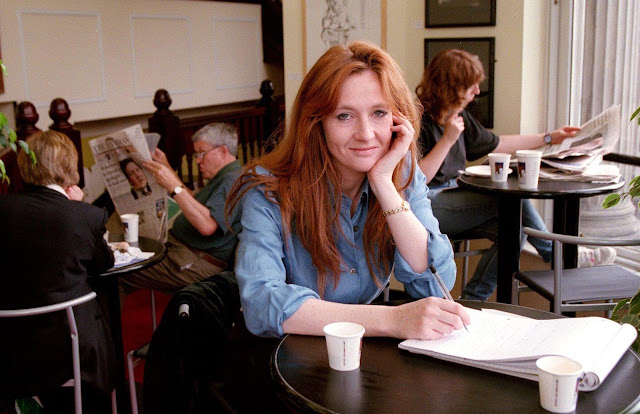
Still, she kept writing. She pushed Jessica around in her stroller until she fell asleep, then went into the nearest café. Most often it was Nicolson’s, a café part-owned by her brother-in-law. She typed up the finished book on a manual typewriter.
The book was finally done. Now someone had to want it.
“No,” Over and Over
Rowling found a literary agent, Christopher Little. His office sent sample chapters to publishers in London.
They came back with no, again and again.
Rowling never publicly named the publishers who turned her down. She has said she still keeps the rejection letters in a box in her attic.
She was close to running out of places to try. Then one small publisher took the sample home.
The 8-Year-Old Who Changed Everything
boredpanda.com
Bloomsbury was a small London publisher. It had only started making children’s books in 1994.
Its chairman, Nigel Newton, took the sample home. He didn’t read it. He handed the first chapter to his 8-year-old daughter, Alice.
Newton later said she came downstairs about an hour later, glowing. She told him it was better than anything else he’d shown her.
Then she wrote her own little review. “The excitement in this book made me feel warm inside,” it begins.
She kept pestering her dad for the rest of the story for months. Bloomsbury signed the book, and editor Barry Cunningham had pushed for it too.
Rowling’s advance was about £1,500. Cunningham told her to get a day job, because she’d never make much money from children’s books.
Why “Joanne” Disappeared From the Cover
baylissbooks.co.uk
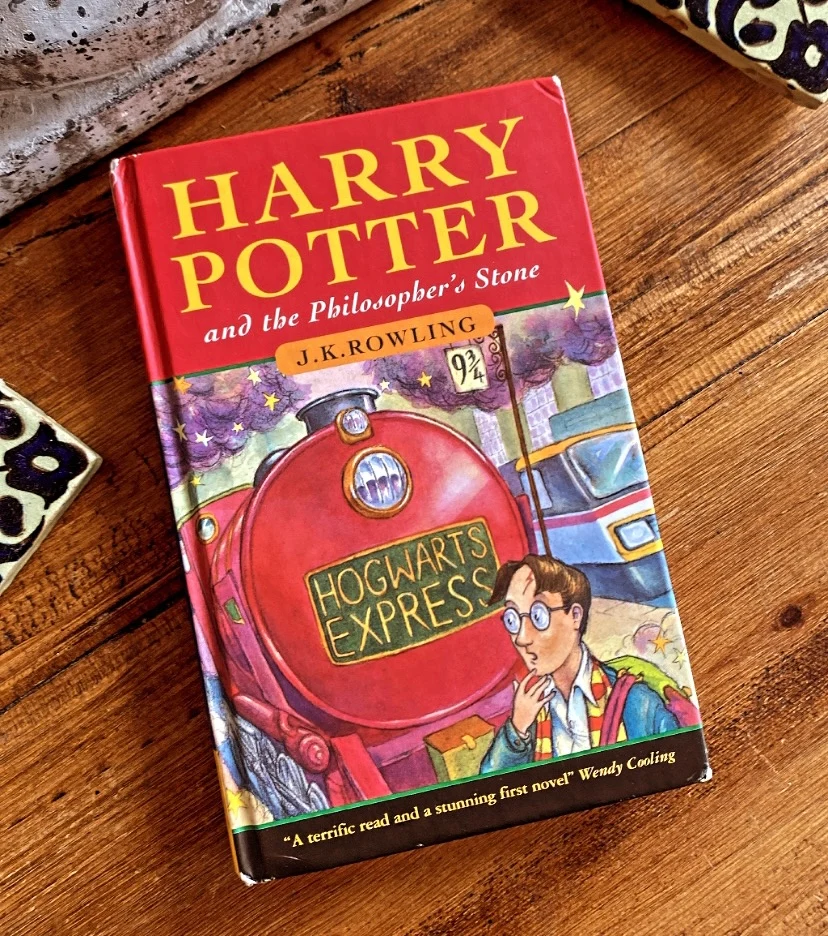
There was one more change. Bloomsbury worried that boys wouldn’t buy a book about a boy wizard written by a woman.
So they asked for initials instead of her first name.
Here’s something most fans don’t know. Rowling had no middle name, so the “K” was borrowed. It came from her grandmother Kathleen.
Rowling didn’t mind. She joked that they could have called her Enid Snodgrass, because she just wanted the book out.
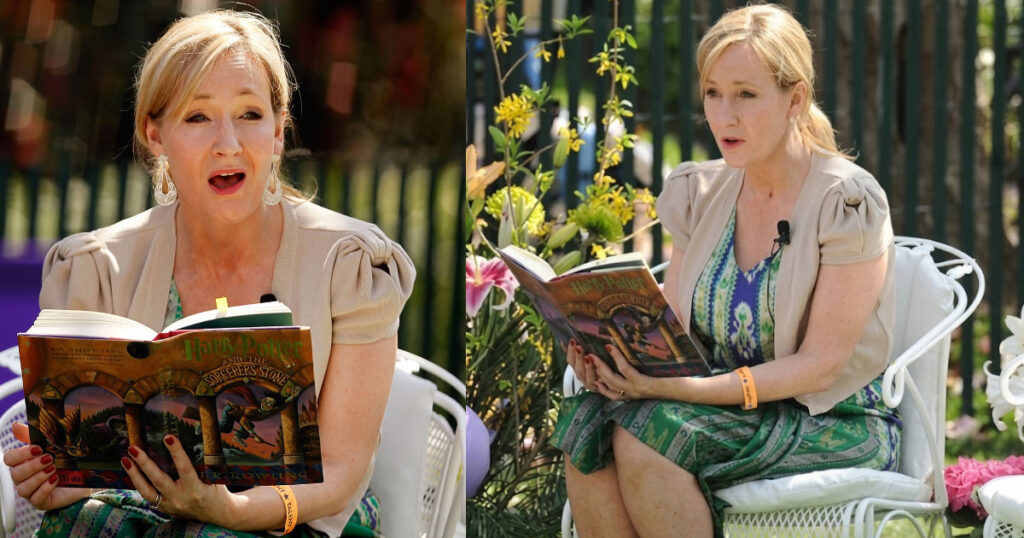
Harry Potter and the Philosopher’s Stone came out on June 26, 1997. The first hardcover printing was just 500 copies, and 300 of them went to libraries.
Today, one of those plain little hardcovers can sell for hundreds of thousands of dollars at auction.
But nobody knew that yet.
The Grant, the Auction, and America
In 1997, Rowling got an £8,000 grant from the Scottish Arts Council so she could keep writing.
That same year, US publishers bid for the American rights. Scholastic won with $105,000. That was a huge amount for a first-time children’s author.
In September 1998, Americans got the book under a new name, Harry Potter and the Sorcerer’s Stone.
From there, the books took off. Fans lined up at midnight. Each new book broke the last one’s sales record. In the US alone, the final book sold 8.3 million copies in its first 24 hours.
The Payoff: From Welfare to Billionaire, and Then She Gave It Away
www.odt.co.nz
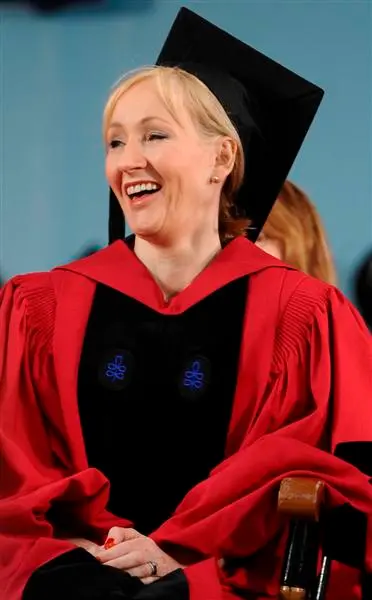
In 2004, Forbes named Rowling the first author ever to become a billionaire. About ten years earlier, she had been living on benefits.
Then she did something few billionaires do.
She gave a lot of it away. In 2005 she started Lumos, a charity that helps children growing up in orphanages get back to families. She funded a multiple sclerosis research clinic in Edinburgh and named it after her mother, Anne.
By 2012, she had given away an estimated $160 million. Between that giving and Britain’s high taxes, Forbes dropped her from its billionaire list.
The book nobody wanted has now sold more than 600 million copies, in 85 languages. It’s the best-selling book series ever.
In June 2025, Forbes said rising earnings from the Harry Potter franchise had made her a billionaire again.
There’s one more detail most people miss. Rowling’s parents first met on a train leaving King’s Cross station in 1964. That’s the same station her train was heading to on the day she dreamed up Harry, and the station Harry leaves from for Hogwarts.
The Lesson in the Rejection Letters
Rowling still has the letters that said no. They’re proof that many experienced publishers saw the same pages and passed.
It only took one honest reader to see what it was, and she was 8 years old.
If you’re holding onto something that keeps getting turned down, don’t throw it out yet. The right reader might just not have found it.

pottertour.co.uk