
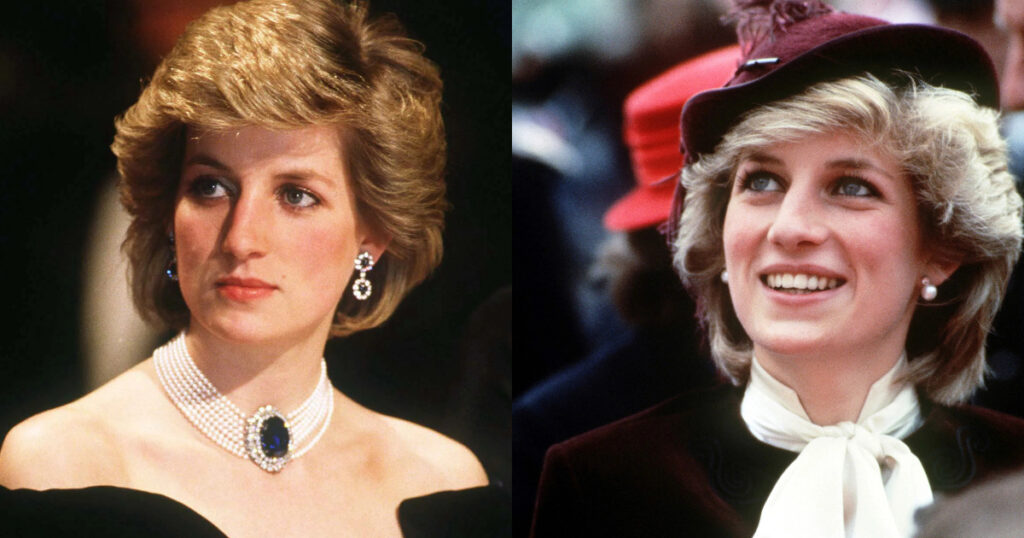

In 1987, people feared AIDS could spread by touch. Here’s what happened when Diana took a patient’s hand, and what came next.
You saw the setup on Facebook. It was April 9, 1987. Princess Diana was about to walk into the Broderip Ward at London’s Middlesex Hospital.
It was the first ward in the UK built just for people with HIV and AIDS. And for days, the press had been asking one question.
Would the princess wear gloves?
A Country Gripped by Fear
You have to remember what 1987 felt like. AIDS was new, deadly and badly misunderstood.
Many people believed you could catch it from a handshake, a hug or a shared cup. That wasn’t true. But the fear was everywhere.
People with AIDS, many of them young gay men, were treated like outcasts. Some lost jobs, homes and friends. Some hospitals had trouble finding staff willing to work with them.
So when a 25-year-old princess agreed to open an AIDS ward, it was big news. But inside the ward, there was a problem nobody saw coming.
The Patients Who Hid Their Faces
The ward had about a dozen male patients. None of them wanted to be photographed with Diana.
They weren’t being rude. They were scared.
Being seen on the front page with AIDS could mean losing everything. The press of the time was often openly hostile to people with the disease. These men had already been through enough.
Think about that for a moment. They were sick, frightened and so stigmatized that meeting a princess felt like a risk.
Finally, one patient said yes. He agreed to be photographed, but only from behind, with his back to the cameras.
Nurse John O’Reilly later told the BBC it didn’t take much convincing. The man was dying, and he figured he had nothing left to lose.
Then Diana walked in.
The Handshake
edition.cnn.com
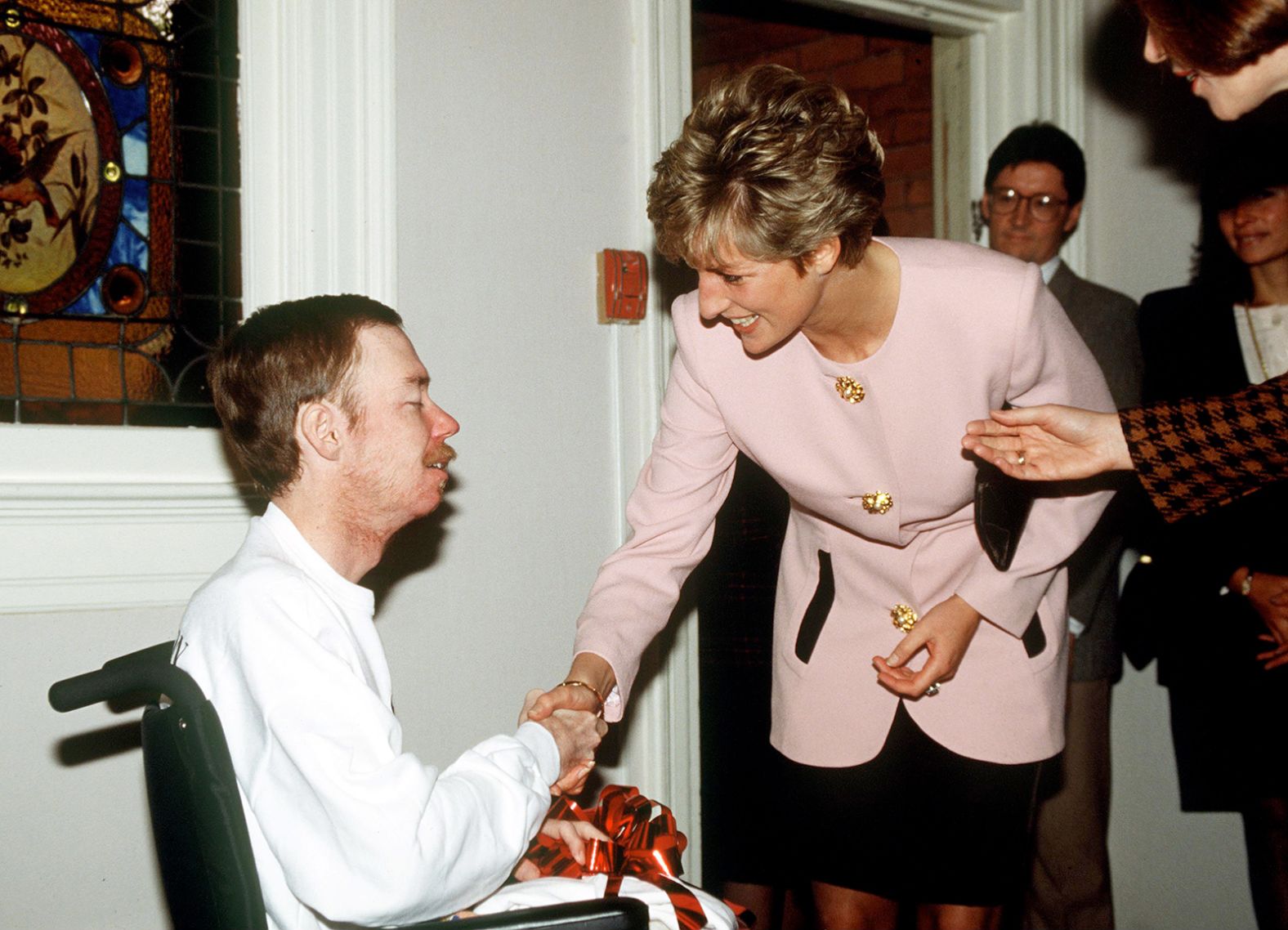
Diana didn’t wear gloves.
She reached out with her bare hand and shook his. She smiled and spoke to him like any other person.
She shook hands with the staff too. O’Reilly later called the moment very moving.
The cameras caught it. Within hours, the photo was in newspapers and on TV screens around the world.
The message needed no speech: you can’t catch AIDS by touching someone. If the most famous woman in the world wasn’t afraid, why should anyone else be?
But Diana wasn’t doing this for one photo. She was just getting started.
The Hug in Harlem
facebook.com
On February 3, 1989, Diana was in New York on her first solo official overseas trip. She was 27.
On her last day, she visited the pediatric AIDS unit at Harlem Hospital. Hundreds of people waited outside in the cold and rain just to catch a glimpse of her.
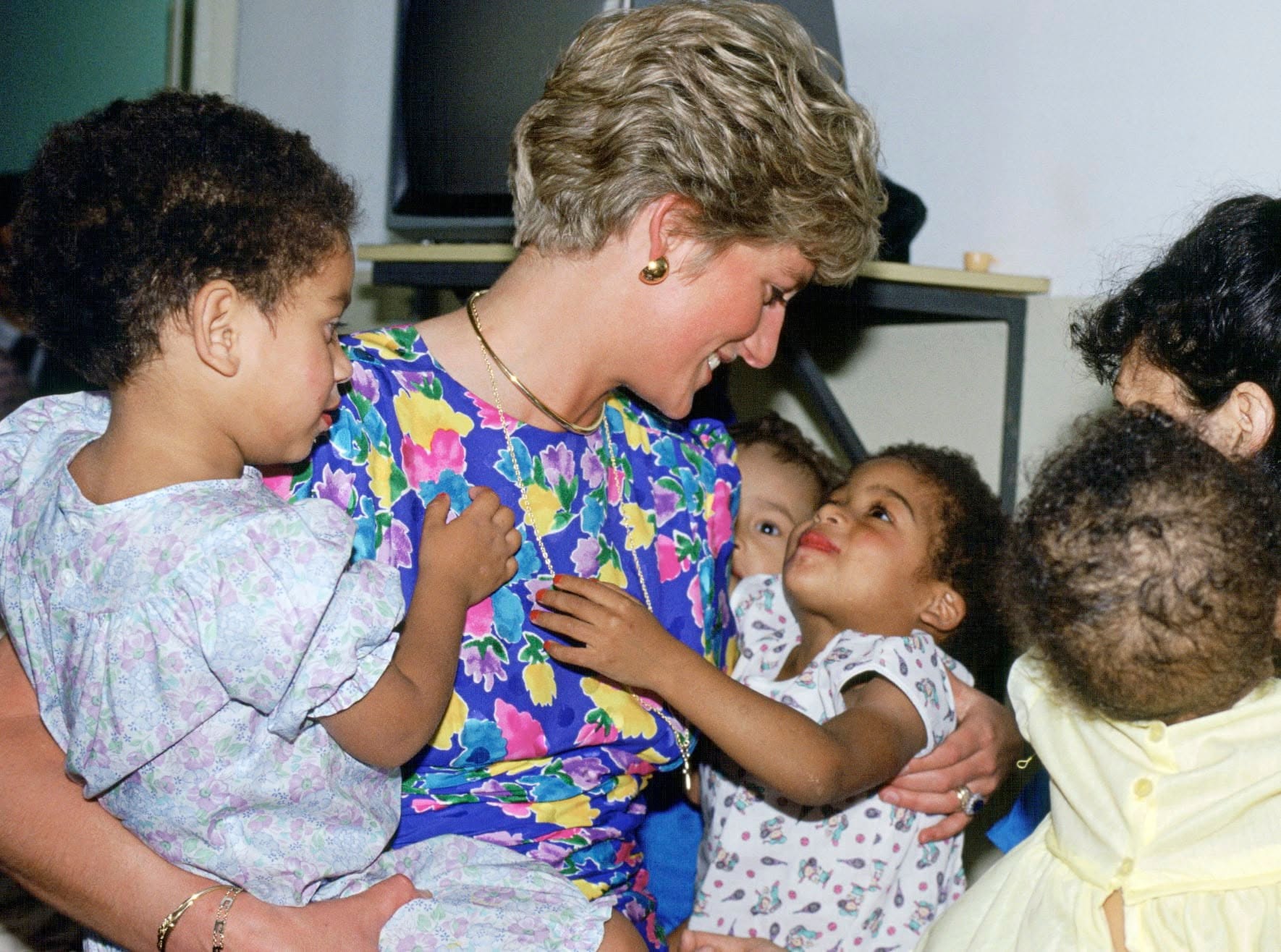
Inside, she stroked babies hooked up to IV lines. Then she noticed a 7-year-old boy in blue pajamas.
“Are you heavy?” she asked. Then she scooped him up and held him close.
For two or three minutes, the boy rested his head on her shoulder with his arms around her neck. Nurses later said people had been afraid to even go into that children’s room.
The hospital’s pediatrics director, Dr. Margaret Heagarty, told Diana her visit showed people with the disease “can be hugged, can be cared for.”
Most people would have stopped there, with one handshake and one hug. Diana didn’t.
She Kept Coming Back
thepinknews.com
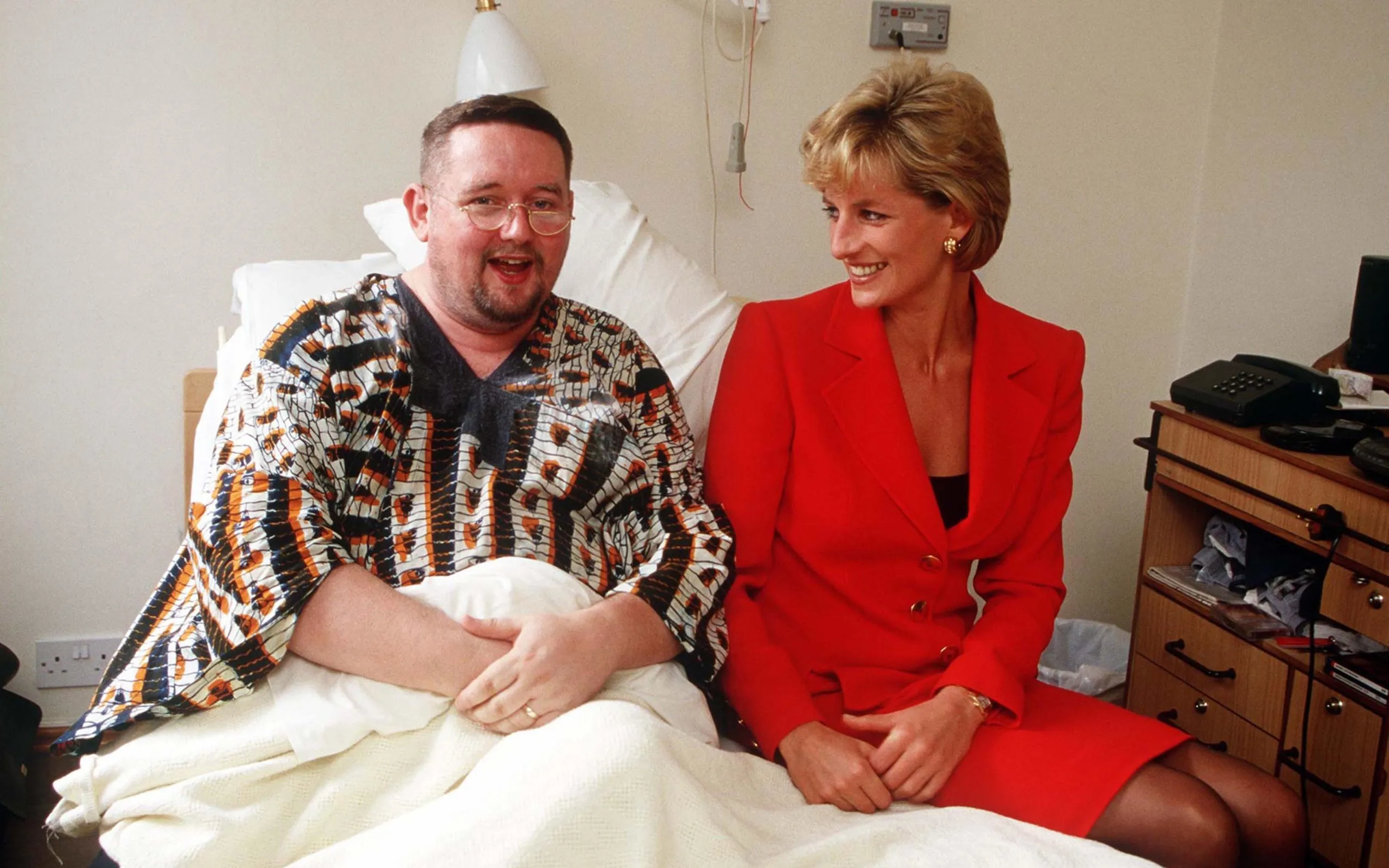
In July 1991, Diana went back to the same Middlesex ward. This time, she brought U.S. First Lady Barbara Bush.
That same year, she visited Casey House, an AIDS hospice in Toronto.
She was also a regular at London Lighthouse, a center for people living with HIV and AIDS. Staff have said she sometimes slipped in with no media at all, just to sit with patients who were very ill.
Here’s a fact most people don’t know. In 1996, Diana gave up almost 100 charity roles. She kept only six, the causes she cared about most.
One of the six was the National AIDS Trust. She was still its patron when she died.
The Promise Her Son Kept
people.com
On August 31, 1997, Diana died in a car crash in Paris. She was 36.
Nelson Mandela later praised her AIDS work. He said that when she sat with a patient and held his hand, she changed how the public saw people with the disease.
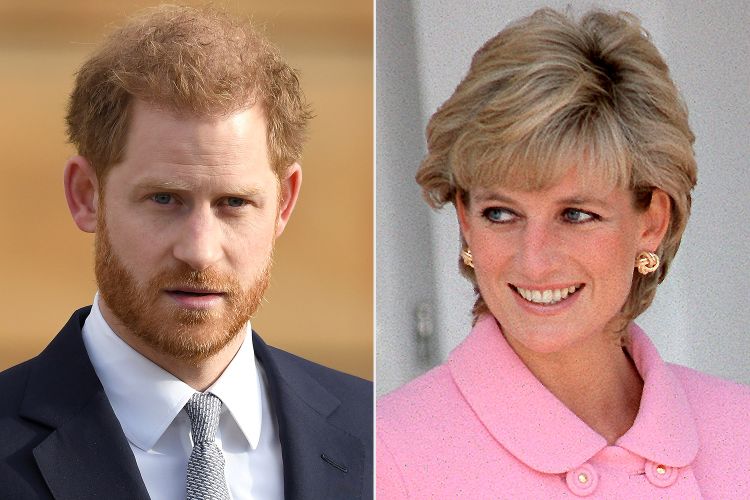
But her story didn’t end there. Her younger son picked up where she left off.
On July 14, 2016, Prince Harry took an HIV test live on the Royal Family’s Facebook page. He wanted to show how quick and easy it was. The video drew more than 2 million views.
The head of the Terrence Higgins Trust, a leading HIV charity, called it a groundbreaking moment. Elton John, a close friend of Diana’s, posted that Harry’s mother would have been very proud.
Months later, Harry took another public test, this time with Rihanna in Barbados.
He has asked people to get tested in his mother’s memory. Twenty-nine years after Diana’s bare-handed handshake, her son was still carrying her message.
One Small Gesture
Diana couldn’t cure AIDS. She couldn’t change the law or invent a medicine.
What she could do was hold out her hand when everyone else was afraid to. That simple act helped millions of people see the patient instead of the disease.
Sometimes the bravest thing you can do is be kind to someone everyone else avoids.